Know What to Look Out for:
Cybersecurity threats continue to evolve, with attackers leveraging a variety of vectors to compromise networks, steal sensitive data, and disrupt business operations. Recognizing and understanding these threats is vital for protecting organizations from cybercrime. Below are some of the most prominent security threats and attack vectors that businesses must prepare for to stay ahead of potential breaches.
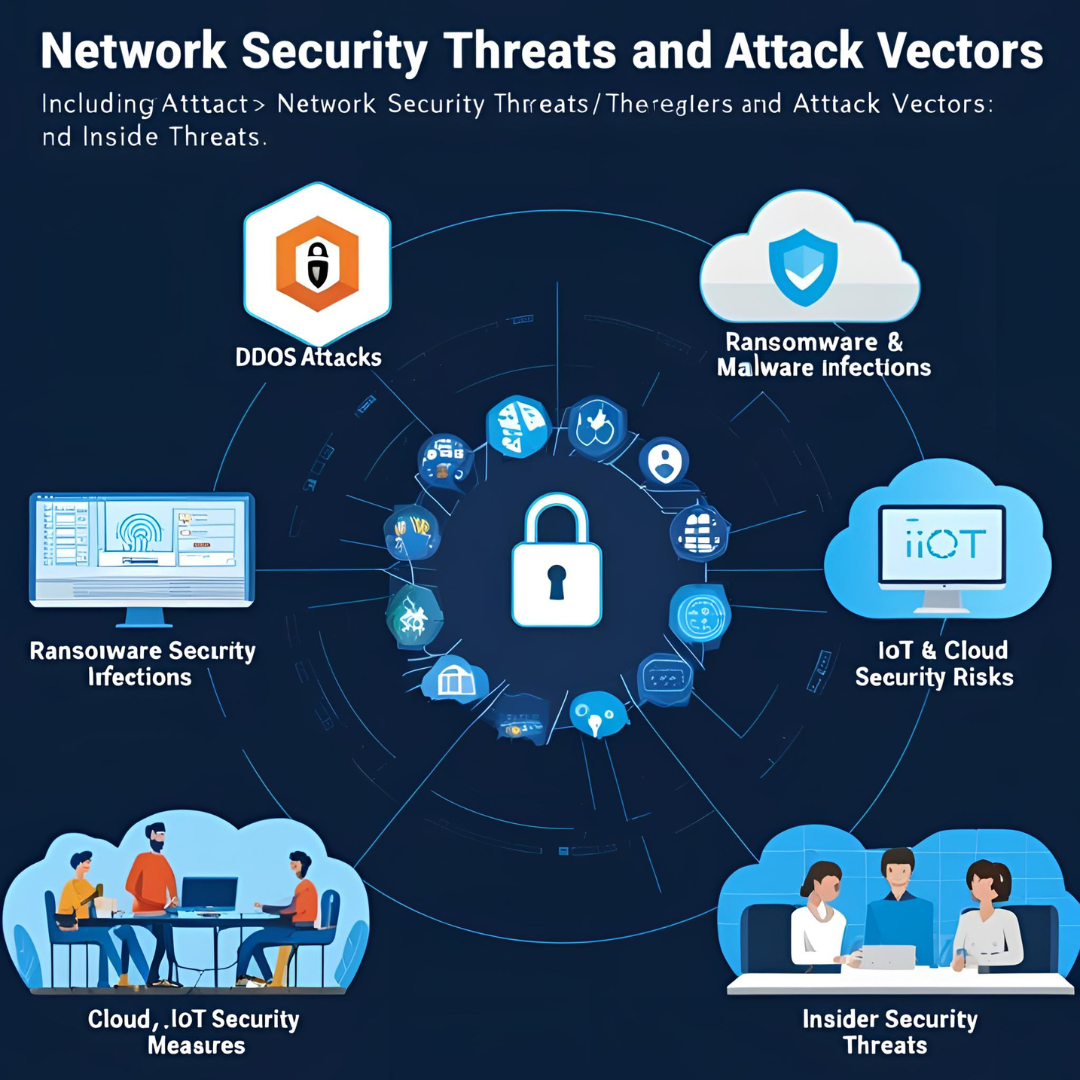
- DDOS Attacks: Distributed Denial-of-Service (DDoS) attacks flood networks with massive amounts of traffic, rendering systems inoperable and causing significant downtime. These attacks target crucial infrastructure, including cloud services, financial institutions, and government networks, with the intent of disrupting operations. Notable DDoS incidents include the record-breaking 2.3 Tbps attack on AWS in 2020, which aimed to disrupt cloud services, and the GitHub attack in 2018, which briefly took down the platform with a 1.35 Tbps (Terabits per second) assault.
- Ransomware & Malware Infections: Ransomware attacks involve malicious software that encrypts an organization’s files, demanding payment for the decryption key. Malware, often spread through phishing emails, software vulnerabilities, or infected downloads, also poses a major risk to businesses. High-profile cases such as the Colonial Pipeline attack in 2021, which caused fuel shortages in the U.S., and the WannaCry outbreak in 2017, which exploited a Windows vulnerability, underscore the devastating impact ransomware and malware can have when endpoint security is insufficient.
- IoT & Cloud Security Risks: Phishing attacks are a common method used by cybercriminals to steal login credentials and distribute malware. These attacks often take the form of deceptive emails that impersonate trusted entities, such as executives, IT personnel, or financial institutions, tricking recipients into revealing sensitive information. Business Email Compromise (BEC) scams, a form of phishing, have led to a $50 billion loss globally between 2016 and 2023. Furthermore, research shows that 90% of data breaches involve human error, with phishing attacks being a leading cause.
- Cloud & IoT Security Measures: As the adoption of IoT and cloud computing expands, new security risks have emerged. Weak authentication, misconfigured settings, and unpatched software in these environments provide attackers with easy entry points to exploit. Examples of vulnerabilities include misconfigured AWS S3 buckets that exposed millions of records in breaches, and IoT botnets like Mirai, which were used to launch large-scale DDoS attacks. These threats highlight the need for careful security measures when managing cloud and IoT infrastructures.
- Insider Threats: Whether malicious or accidental, insider threats present a serious risk to network security. Employees with access to sensitive data may intentionally leak information or engage in malicious actions, such as selling credentials or sabotaging systems. Negligence, such as mishandling data or falling for phishing scams, can also compromise security. Statistics reveal that 30% of cybersecurity incidents are caused by insider threats, emphasizing the importance of implementing strict access controls and monitoring to detect and prevent such risks.